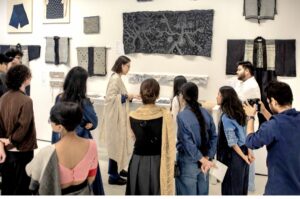

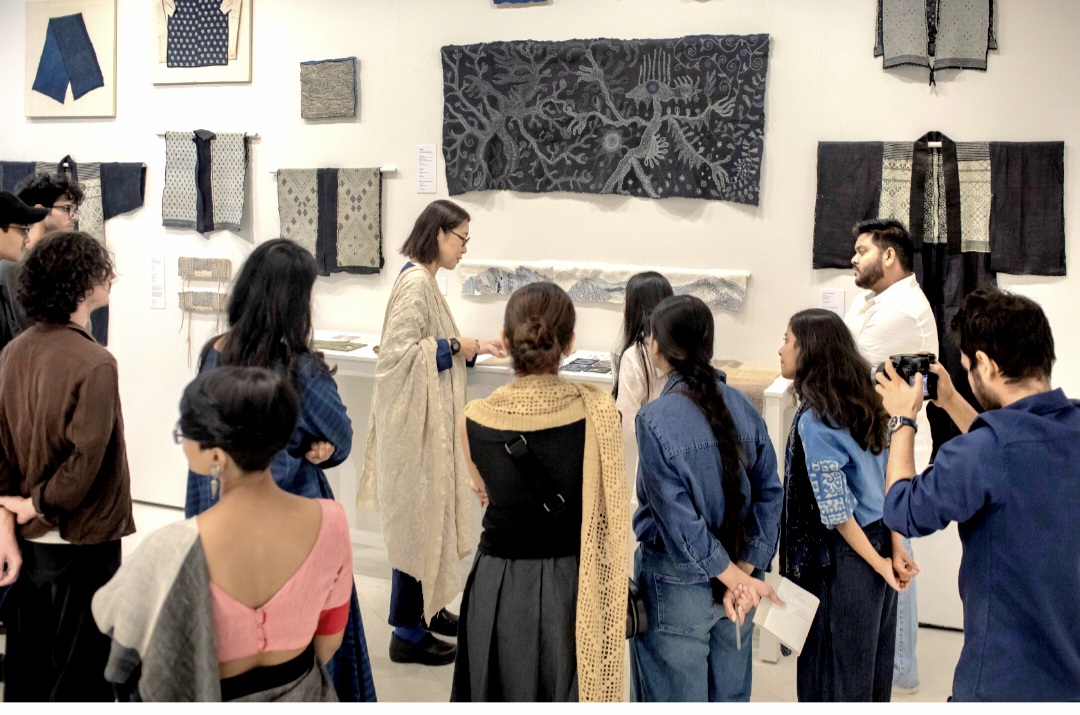
Staff Reporter : kolkata, 16th November 2026. Tãka-Tãka: An India–Japan Conversation on Kantha & Sashiko brought together practitioners, researchers, designers and cultural advocates from India and Japan to explore the histories, practices and contemporary relevance of two textile traditions. The colloquium examined craft as a living body of knowledge, with discussions on material culture, repair, design, artisan agency and the continuity of traditional practices.
The day opened with Rudra Chatterjee, Chairman, Obeetee and Managing Director, Luxmi Group, who spoke on Nurturing Craft, Building Continuities, highlighting the importance of sustaining India’s handmade textile heritage and nurturing the communities and knowledge systems that support it.
This was followed by an address by Mr. Katsunori Ashida, Deputy Consul General of Japan in Kolkata, on Japan–India cultural dialogue and the importance of shared cultural understanding.
The morning sessions began with Paola Manfredi, Designer and Textile Researcher, who explored two distinctive genres of Bangladeshi kantha – the Tree of Life and Lohori – drawing on her research and collaborations with women artisans in Jessore and Khulna. She was subsequently in conversation with Bappaditya Biswas, Co-Founder, Bailou & Byloom, discussing kantha’s place in Bengali households and its associations with everyday life, memory and domestic histories.
The afternoon turned towards Japanese textile traditions with Kou Uchimura, Director, Iwatate Folk Textile Museum, Tokyo, who examined sashiko through the museum’s collection, focusing on its practices of protection, repair and reinforcement. Kozueko Shinde, Independent Textile Artist, followed with a personal reflection on her journey with kantha, exploring artistic practice, apprenticeship and the transmission of textile knowledge across generations.
Fumie Kobayashi, Founder, CALICO: The ART of INDIAN VILLAGE FABRICS, traced the shared histories of kantha and sashiko through Funzōe, Japan’s Buddhist stitched rag robe, exploring the enduring relationship between cloth, repair and renewal.
The subsequent sessions explored artisan agency and material culture. Shreya Kanoi, Head of Design and Research, Obeetee Craft Studio, along with Anuska Dutta and Nadira Begum, discussed creative collaboration with kantha artisans and the importance of recognising makers as active contributors to the design process.
Poludas Nagendra Satish, Founder, Kora Design Collaborative, examined the material histories of kantha through old pieces collected by Obeetee Craft Studio, considering what they reveal about fabrics, weaves, designs and traditional material choices.
A conversation between Latha Tummuru, Creative Enterprise Development Specialist, Creative Dignity, and Suket Dhir, Fashion Designer, addressed women’s home-based craft practices, focusing on creative autonomy, craft economics and the future of women’s work in craft.
The day concluded with an audio-visual presentation by Kanika Mukerji, Utsaco, which explored kantha as embodied and shared knowledge, drawing on a workshop in Santiniketan to reflect on how craft traditions are transmitted through the hands and practices of their makers.