
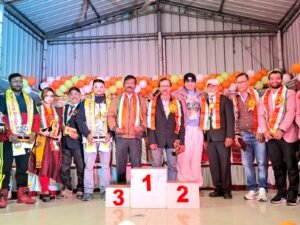
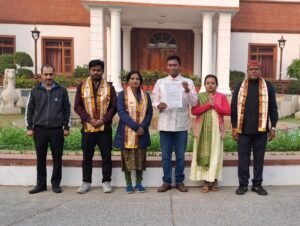

Staff Reporter : Murshidabad, 4th November 2025: Over the last weekend of October, 65 leading educational consultants from across India visited Murshidabad — and unanimously agreed that the district holds unparalleled potential as a hub for experiential learning for students from schools and colleges alike.
Within just a five-kilometer radius, Murshidabad boasts more than 50 centrally protected monuments and 25 state-protected archaeological sites, offering students a living classroom of history, art, architecture, and culture.
Among the highlights of the visit was Tantipara, the historic weavers’ quarter where students of textile, fashion, and interior design can witness the making of Baluchari sarees, Garad silk, and Ahinsak silk — exquisite fabrics found nowhere else in the world. Each Baluchari saree takes nearly a year to complete, selling for ₹1 lakh locally and fetching ₹3 lakhs in Indian metros and ₹6–10 lakhs in international markets.
Murshidabad’s artistic heritage is equally vibrant. The district is home to thousands of performing artists, from classical dancers and folk troupes to Ghazal and Bollywood singers — including the celebrated Arijit Singh, whose roots lie here. The neighboring areas of Ajinkya and Jaigarh are now fondly called the “Music City of India,” where young talents are passionately pursuing music and traditional dance forms such as Kathak and Bharatanatyam.
Religious and architectural heritage flourishes here as well, with 15 Jain temples, a revered Shakti Peeth, and the famous Char Bangla temples built by Rani Bhawani, known for their world-class terracotta work rivaling that of Bishnupur. Murshidabad also houses some of eastern India’s most visited heritage sites, including:
1. Hazarduari Palace Museum – over 2 million annual visitors
2. Kathgola Palace – 1.2 million visitors
3. House of Jagat Seth – approximately 1 million visitors
4. Nasipur Rajbari – another major attraction for tourists
During their visit, the consultants experienced Murshidabad’s heritage firsthand through boat rides to Char Bangla Temple, yoga sessions, heritage walks, and an exploration of local street food along Jiyagunj Ghat. They also attended AI-generated film screenings on Jagat Seth, the Sarvali community, Rani Bhawani, and the Battle of Plassey, hosted at the House of Sheherwali, a museum dedicated to sustainability and community history.
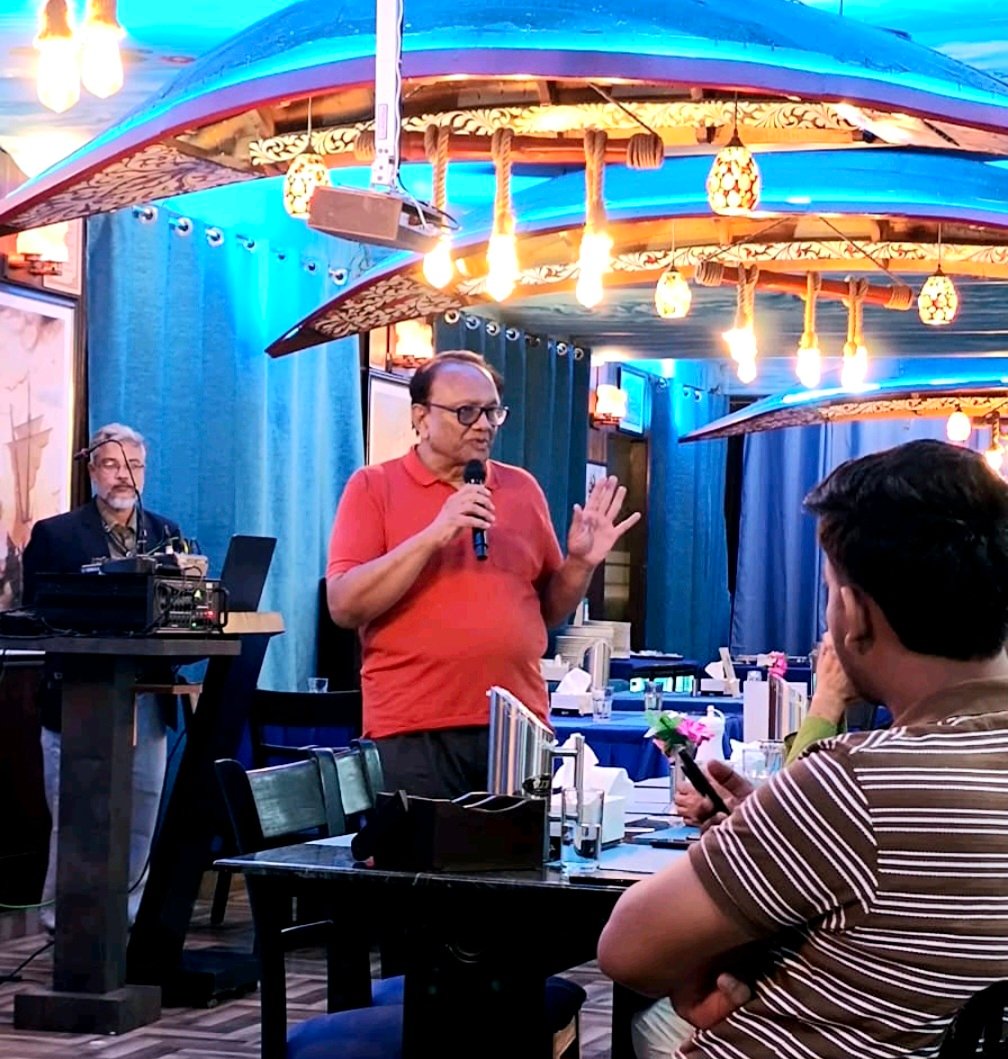
Workshops on life skills and presentations on iLEAD – Institute for Leadership, Entrepreneurship and Development) showcased how Murshidabad can serve as a model for holistic, interdisciplinary learning experiences. The itinerary concluded with a visit to Krishnanagar, renowned for its bronze statue craftsmanship and traditional Bengali sweets such as Sarpuria.
Many participants later wrote in to express their appreciation to ILEAD for organizing the tour, describing it as an “eye-opening educational journey.” They emphasized that Murshidabad — located less than a four-hour drive from Kolkata — offers an immersive 360° learning experience unmatched anywhere else in India.
Encouraged by this visit, the consultants have pledged to recommend Murshidabad as a destination for hands-on educational tours, helping students experience living heritage, craftsmanship, and sustainability firsthand, right in the heart of Bengal.